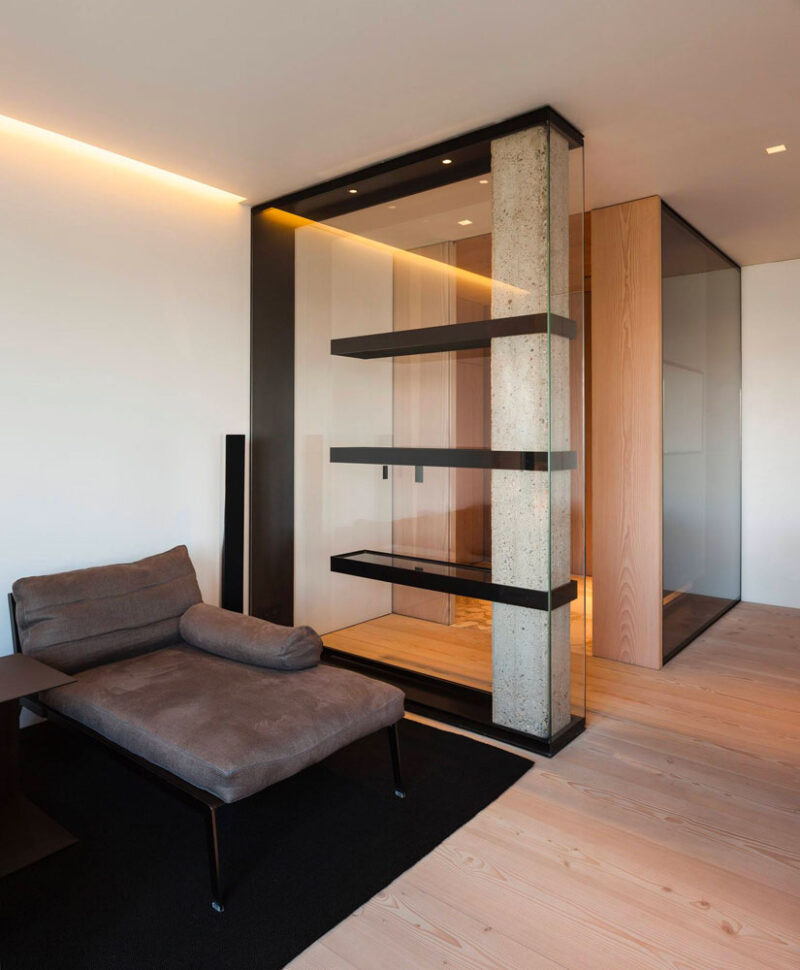


Stages, project management, budget, companies, construction site: understanding what makes the difference between an ordinary renovation and a perfectly managed project
Renovating an apartment in Lyon or a house in the Pays de Gex is not just about changing a kitchen, redoing a bathroom or modernizing outdated decor.
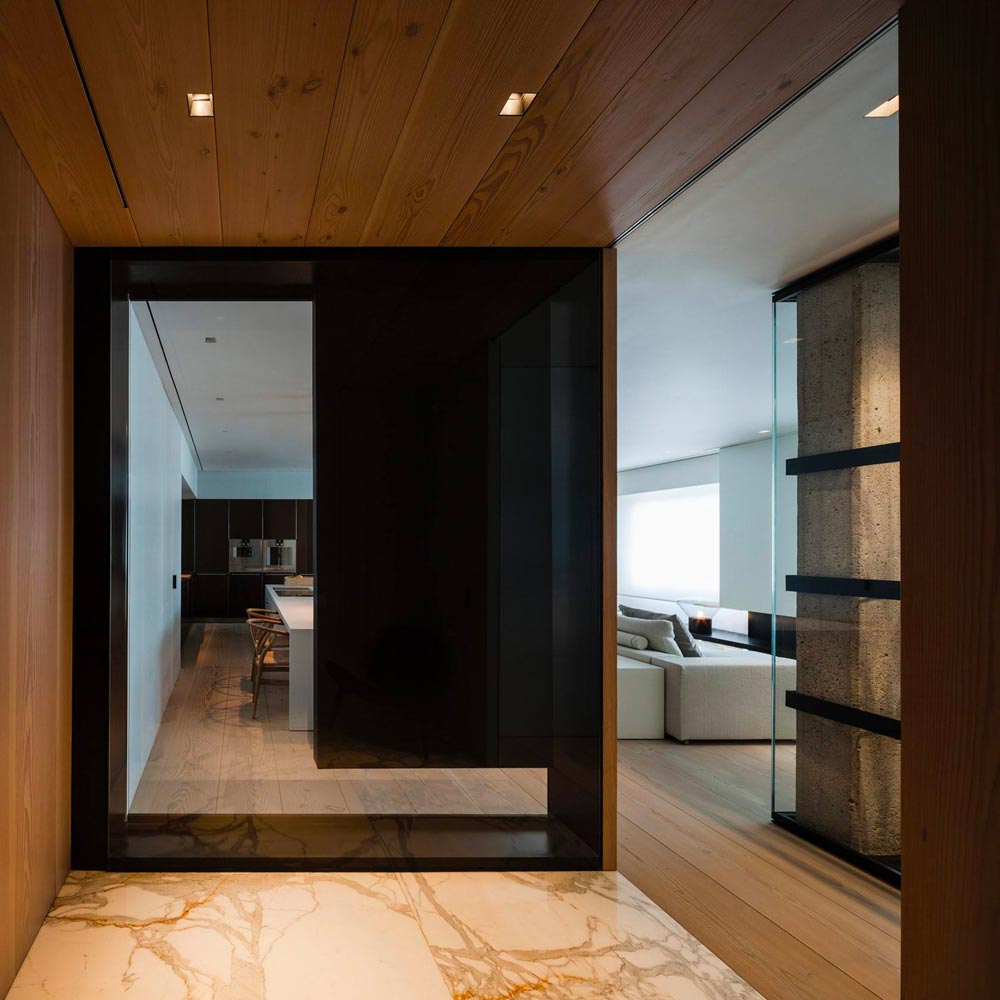
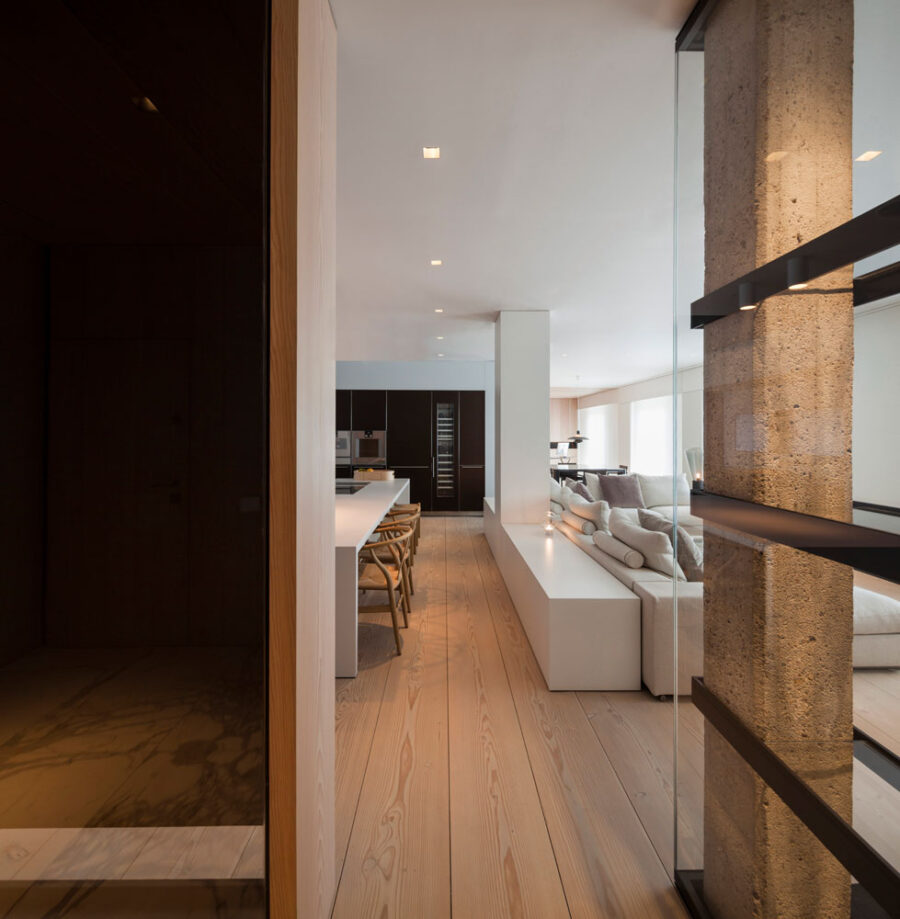
A complete renovation raises much deeper issues:
Dans les quartiers anciens lyonnais — Presqu’île, Ainay, Croix-Rousse, 6e arrondissement, Monplaisir ou encore Villeurbanne République — chaque appartement possède ses propres contraintes :
This is precisely where the role of an interior architect in Lyon becomes fundamental.
Because a successful renovation isn’t just about beautiful materials or inspiring images. It relies above all on a rigorous methodology capable of transforming a space in a coherent, sustainable, and controlled way.
Today, many renovations partially fail despite significant budgets. Not because of the companies or the materials, but because the project was insufficiently planned from the outset.
Lack of overall vision, project started too early, lighting treated too late, improvised technical details, insufficient coordination: these errors often produce expensive… but incoherent interiors.
Conversely, the highest quality renovations almost always rely on the same logic:
a strong link between interior architecture, project management and precision of execution.
Here is how a complete renovation with an interior designer in Lyon actually unfolds.
In Lyon, older properties often possess exceptional architectural quality:
However, these qualities are frequently accompanied by complex technical constraints:
The role of the interior designer is then to reveal the potential of the place without altering its character.
Unlike a purely decorative approach, a complete renovation involves:
It is this ability to link aesthetics, technique and budget that truly transforms a project.
The final quality of a renovation depends heavily on the decisions made before work begins.
However, this step remains largely underestimated.
Many individuals want to get started quickly:
However, a successful renovation rarely begins with the work itself.
It begins with a thorough analysis of the location.
Understand the uses before drawing
A high-end renovation should not simply be aesthetic.
It must improve:
In an old apartment in Lyon, certain questions become fundamental:
This study phase also helps to avoid the most frequent mistake:
treating each room separately without an overall architectural vision.
The preliminary design phase (APS) constitutes the true design phase of the project.
This is where several hypotheses are being studied:
In the highest quality projects, several variants can be compared in order to identify the most coherent solution.
A good project is not necessarily the most spectacular.
It is often the one who produces:
Once the direction is validated, the project enters the APD (Final Preliminary Project) phase.
This step significantly enhances the precision of the project:
This is also where the aesthetic coherence of the project is born.
High-end interior design: why consistency is more important than luxury
A high-end renovation is not solely based on expensive materials.
True architectural luxury often lies in:
An interior can incorporate:
Conversely, simple materials can create an exceptional atmosphere when perfectly orchestrated.
This is particularly true in contemporary minimalist projects where every detail becomes visible:
In a complete renovation in Lyon, the materials have a direct influence:
The choice of materials cannot therefore be separated from the architectural project.
The ground influences light.
Light influences textures.
Textures influence the perception of volume.
This overall consistency often constitutes the difference between:
The Tender Documents (TD) are probably one of the most important steps… and the least visible to the client.
However, it is often here that the true quality of the construction project is determined.
The tender documents include, in particular:
Without a detailed plan, a construction project quickly becomes:
In Lyon, many renovations still suffer from a structural problem:
companies are working from insufficient documentation.
Result :
Two quotes can differ by tens of thousands of euros for very different reasons:
The interior designer then plays a crucial role:
This step also helps to maintain the project’s budgetary balance without compromising its architectural quality.
This is often where the difference becomes most visible.
Without project management, the client must coordinate everything themselves:
In a complete renovation, this quickly becomes extremely complex.
The role of the project manager
Project management enables:
Even with excellent preparation, a construction site remains a living organism.
Adjustments are always necessary:
Without precise guidance, these micro-decisions gradually degrade the quality of the project.
Acceptance is not simply about “finishing the work”.
It allows you to check:
In high-end renovations, the final details often produce the final perception of the project:
The invisible costs are numerous:
networks, technical upgrades, lighting, joinery, coordination.
An insufficiently studied project almost always generates additional costs.
Furniture can never fix bad interior design.
Lighting must be considered from the earliest stages of the project.
This is one of the main causes of tensions on construction sites.
A project must respond to the location, not to a generic trend.
True high-end quality is based on overall consistency.
A successful complete renovation is not solely based on aesthetics.
It is based on a precise articulation between:
It is this overall coherence that allows for the lasting transformation of an apartment or house.
In a Lyon market where many renovations remain fragmented or insufficiently planned, architectural mastery is now becoming a real differentiating factor.