

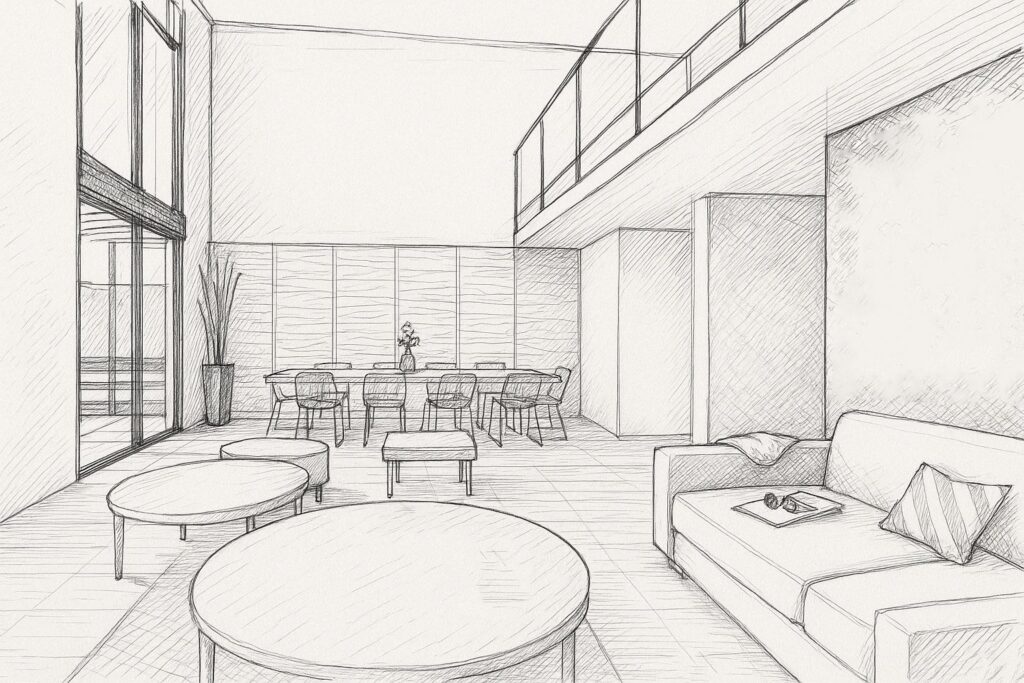
In short
- Choosing your interior architect means first assessing their method, technical expertise and experience, not just their images.
- An interior architect designs and transforms the space; a decorator works mainly on atmosphere, furniture and colours.
- For a complete renovation, choose a professional who provides project management through to the handover of the works.
- The title of interior architect is not protected in France: recognition by the CFAI is a reliable benchmark.
- Ask for a certificate of professional liability insurance and ten-year liability insurance.
- Compare fees against the overall cost of the project, not just the cost of the assignment.
- Choose someone you communicate easily with: the collaboration involves many discussions and work phases.
Interior architect, decorator or architect: who should you hire?
Before comparing profiles, you need to know which professional your project requires. The three professions are often confused, yet their roles are very different:
- the interior architect designs and transforms the interior of an existing home: reorganising volumes, circulation, light, materials, technical drawings and, when providing project management, supervising the works;
- the decorator works on atmosphere: colours, textiles, lighting, choice of furniture. They do not manage heavy building work and have neither the insurance nor the skills to do so;
- the architect, registered with the Ordre des architectes, works on the building itself: construction, extensions. Hiring one is mandatory for a building permit when the floor area exceeds 150 m².
The boundaries are not watertight. An interior architect can also handle decoration, design bespoke furniture, or work with an architect and a structural engineering firm when the project involves a load-bearing wall. For the complete renovation of an apartment or a house, they are usually the one who ensures the overall coherence.
Defining your project before choosing an interior architect
An interior architect is easier to choose when you know what you expect from them. Before the first meetings, take the time to clarify three points:
- the nature of the project: refurbishing one room, a partial renovation or a complete renovation of the home;
- the planned works budget, clearly distinguishing between the cost of the works and the fees;
- the level of support you want: design only, or design and project management through to the handover of the works.
These elements directly guide your choice and make discussions with your future interior architect easier. A professional used to decoration projects will not necessarily be the right person to restructure an old apartment. Proximity matters too: an interior architect who knows the tradespeople and the built heritage of your area, whether in Lyon, in Annecy or around Geneva, will find it easier to oversee the works.
The 10 criteria for choosing the right interior architect
Here are the criteria that I believe really matter when choosing an interior architect.
1. Don’t be won over by images alone
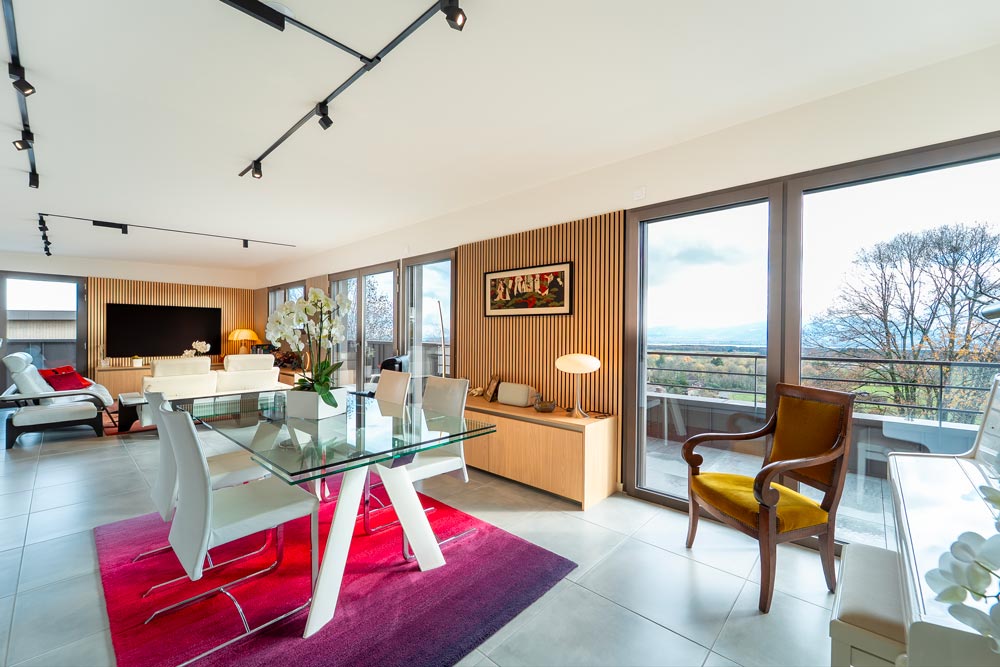
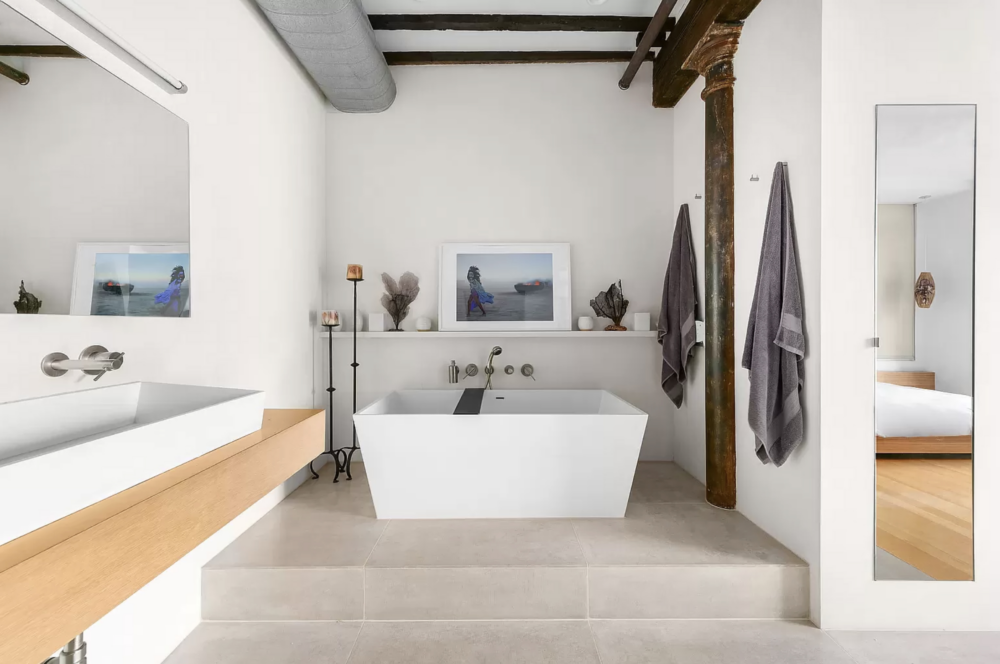
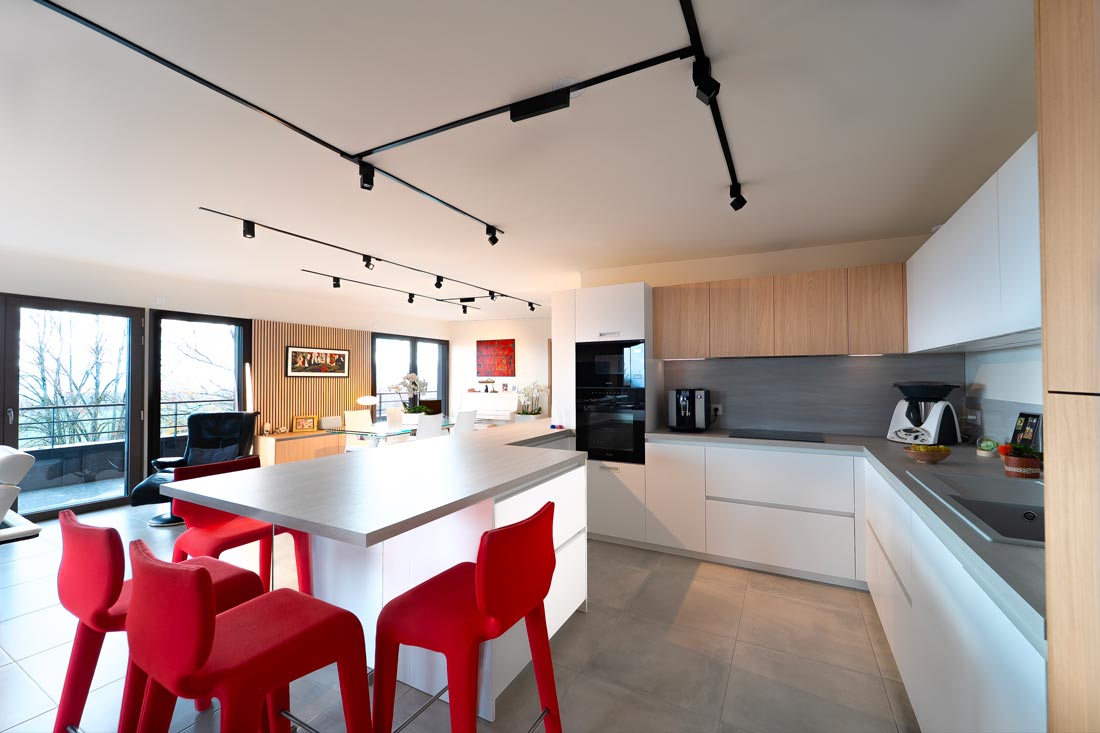
We are naturally drawn to beautiful photographs and spectacular renderings. They make us want the result and help us picture it.
However, these images only tell a small part of the story.
A successful project is not just about a warm atmosphere, careful lighting or elegant furniture. The volumes must also work, the circulation must be coherent, the materials must suit their use, the light must be controlled and every detail must be buildable by the contractors.
Today, producing an attractive perspective drawing has become relatively easy.
Turning that image into a successful building project is a completely different skill. For each project you are shown, ask yourself what lies behind the image: which drawings, which choice of materials, which construction details?
2. Renovation is first and foremost a technical exercise
Contrary to popular belief, the job of an interior architect is not just about choosing colours, furniture or finishes.
A complete renovation requires in-depth knowledge of buildings.
Each project can raise very different questions:
- load-bearing structure;
- electrical networks;
- plumbing;
- heating and ventilation;
- thermal and acoustic insulation;
- lighting;
- safety standards;
- regulatory constraints;
- coordination between the different trades.
In an existing building, the unexpected is part of the project. Experience makes it possible to anticipate many of these situations, limit unforeseen problems and quickly propose solutions when difficulties arise.
Depending on the nature of the works, the interior architect also works with partners: a structural engineering firm to open up a load-bearing wall, a thermal engineer, an acoustician or a surveyor. Knowing when to call on them is part of the job.
Aesthetics can never be separated from technical feasibility.
3. Look at experience and length of practice
The number of years in practice is not everything, but it does matter. Above all, it is worth looking at the professional’s background.
How long have they been practising?
What types of projects do they mainly carry out?
Do they really work on complete renovations, or mainly on decoration projects?
Do they have references comparable to your project?
A Haussmann-style apartment, a 1970s house or a contemporary villa do not present the same constraints.
Experience often makes it possible to quickly identify sensitive points and steer the right decisions from the very first studies.
For my part, I have been practising for more than twenty years, mainly on complete renovations of apartments and houses with full project management, as an interior architect in Lyon and in the Pays de Gex.
4. Take an interest in their working method
Beyond the final result, the way a project is run is decisive.
A clear method reduces uncertainty and ensures coherent progress.
It generally includes:
- analysis of the existing space and your needs;
- the project design;
- detailed drawings;
- technical documents for the contractors;
- consultation of tradespeople;
- analysis of quotes;
- supervision of the works through to handover.
This preparation represents a large part of the work, but it is often invisible to the client.
Yet it is what largely determines the quality of the finished project.
When the interior architect provides project management, they remain your single point of contact at every stage of the project, from the first meeting to the handover of the works. Without this assignment, it is up to you to coordinate the contractors. A structured method also allows the project to start on a solid footing, without launching the works too early.
5. A good technical file prevents many problems
Contractors cannot work properly from a few mood images.
They need precise plans, sections, technical details, material references, electrical layouts and information on lighting, sanitary fittings, joinery and finishes.
In a project management assignment, this file takes the form of a DCE (tender documents for contractors), supplemented by a CCTP (specific technical specifications) that precisely describes the works, the materials and how they are to be installed.
The more precise the file, the less the contractors interpret the project.
The less they interpret, the fewer mistakes there are.
A good file also makes it possible to compare quotes on a common basis, which makes them easier to analyse.
6. Beware of false savings on fees
The question of price naturally comes up very often. Yet comparing fees alone is a common mistake.
The real cost of a project is never limited to the cost of the assignment.
Insufficient support can lead to:
- gaps in the support provided;
- additional works;
- construction errors;
- costly rework;
- delays on site;
- unsuitable technical choices;
- materials replaced during the project.
In the end, a saving on fees can sometimes result in a much higher overall cost.
The aim is therefore not to choose the cheapest professional, but the one whose added value will secure the whole operation.
Depending on the professional, an interior architect’s fees take the form of a fixed fee, a quote per phase or a percentage of the cost of the works. What matters is that they are set out in writing, with details of the services included. Also bear in mind the cost of a complete renovation in Lyon: depending on the level of transformation, it is generally between €1,500 and €3,000 per m², and sometimes much more for high-end renovations.
7. The contractors are as important as the project
An excellent project can be compromised by unsuitable contractors. Selecting who will carry out the work is therefore an essential step.
It is not just a question of finding the lowest price, but also of assessing:
- their reliability;
- their experience;
- their ability to meet deadlines;
- the quality of their work;
- their ability to work alongside the other trades.
Your interior architect should also check the insurance of the contractors consulted, in particular their ten-year liability insurance. Working with long-standing tradespeople is a real guarantee of quality workmanship.
A renovation is above all a team effort.
8. Ask to see completed projects
Computer-generated images are useful. Photographs of completed projects are even more so.
They show what has actually been built.
Don’t hesitate to look at:
- client testimonials;
- online reviews;
- detailed case studies;
- projects comparable to yours.
These elements give a much more complete picture of the quality of the work carried out.
A full case study, with the initial state, the plans and the finished result, often says more about an interior architecture project than a series of mood photos.
9. Check insurance and qualifications
This subject is rarely raised, yet it is fundamental. An interior architect must be able to inform you clearly about:
- their professional insurance;
- how they practise;
- their qualifications;
- their ethical commitment;
- the services they actually provide.
You should know that the title of interior architect is not protected in France: anyone can use it. Several benchmarks nevertheless make it possible to check a professional’s reliability:
- recognition by the Conseil français des architectes d’intérieur (CFAI), which certifies a level of training, a qualified professional practice and an ethical commitment;
- a certificate of professional liability insurance and ten-year liability insurance, essential as soon as they provide a project management assignment;
- a written contract specifying the services, the schedule and the fees.
For my part, I am an interior architect recognised by the CFAI, of which I have been vice-president since 2023, and the studio is insured by the Mutuelle des Architectes Français for professional liability and ten-year liability.
This information helps build the trust that must exist between the client and their interior architect.
10. Above all, choose someone you can work with for several months or years
A renovation project is a human adventure. You will make many decisions together.
You will sometimes have to settle technical choices, budget questions or unforeseen issues on site.
The quality of the relationship is therefore essential.
Beyond skills, choose a professional who takes the time to listen, explain and justify their choices, and with whom dialogue is simple and natural.
The first meeting is the right time to check this. Ideally held at the property, it lets you see whether you understand each other before making any commitment.
Warning signs that should make you hesitate
Conversely, certain signs should prompt caution:
- beautiful 3D renderings, but no technical drawings or sample file to show;
- vague fees, or a quote with no details of the services included;
- no ten-year liability insurance certificate provided;
- no site visits planned during the works;
- vague answers about handling unforeseen issues or the handover of the works;
- a project that reproduces fashionable images without taking your home or your lifestyle into account.
Questions to ask an interior architect before signing
Before making your choice, don’t hesitate to ask a few simple questions:
- How long have you been practising?
- Do you mainly carry out partial renovations, complete renovations or decoration projects?
- Who prepares the technical files? Can you show me one?
- Do you supervise the works?
- How do you select the contractors?
- How do you handle unforeseen issues?
- How do you organise the handover of the works?
- How are your fees calculated?
- Can I see some comparable projects?
- What insurance do you have?
- How many projects do you run at the same time?
The answers will often tell you as much about their working method as about the professional’s personality.
The handover of the works deserves particular attention. It is formalised by a handover report, signed with the contractors, which lists any snags. It is also what triggers the guarantees: the one-year completion guarantee, the two-year guarantee and the ten-year guarantee.
There is no such thing as the best interior architect in absolute terms. Above all, there is a professional whose skills, method and sensibility match your project.
Don’t let yourself be guided solely by images or by the amount of the fees.
Take the time to understand how they work, their experience, their ability to anticipate difficulties and the quality of the support offered.
A renovation is a complex exercise in which aesthetics, technique, organisation and people are closely linked.
When these four dimensions come together, the works run more smoothly and the result generally lives up to expectations.
That is probably the best criterion for choosing your interior architect.
Are you planning a renovation project in Lyon, the Pays de Gex or Annecy? Contact your interior architect for a first advisory meeting.
FAQ: key takeaways
What is the most important criterion when choosing an interior architect?
Their working method. The success of a project depends more on the studies, the technical file and site supervision than on presentation images.
What is the difference between an interior architect and a decorator?
An interior architect transforms the space and can manage the works. A decorator works on atmosphere, furniture and colours, without touching the structure of the home or carrying out building work.
Does an interior architect need ten-year liability insurance?
Yes, as soon as they provide a design or project management assignment for building works. Ask for a valid certificate, together with their professional liability insurance.
How can you check an interior architect’s qualifications?
As the title is not protected, rely on recognition by the CFAI, on their background and on references for projects comparable to yours.
Should you choose the cheapest interior architect?
No. Low fees can hide incomplete support, leading to mistakes and extra costs. Compare the services included and the overall cost of the project.
When should you bring in an interior architect?
As early as possible, before consulting contractors. The decisions made during the design phase determine most of the budget and the quality of the works.